Get FREE shipping on all non-hazmat orders of $125 +
Get FREE shipping on all non-hazmat orders of $125 +


UL100E AVGAS
VP Racing and LyondellBasell joined forces in 2018 to develop a high‑octane unleaded aviation gasoline through the FAA’s Piston Aviation Fuels Initiative (PAFI). In late 2023, UL100E became the first unleaded aviation fuel to pass the FAA‑required 350‑hour durability test in a turbocharged Continental TSIO‑550‑K engine, clearing a critical milestone toward fleet authorization. Now in its seventh year, the program has progressed into full‑scale FAA and OEM testing encompassing 13 engines, 9 aircraft, and more than 214 aircraft and fuel‑system materials—representing over 77% of the general aviation fleet—while ASTM development continues in parallel, with the ASTM production fuel specification targeted for completion this year.
2026 ACHIEVEMENTS
LyondellBasell/VP Racing UL100E fuel completed PAFI qualification testing.
- Materials Compatibility: Ongoing compatibility testing across metals, elastomers, sealants, fuel bladders, composites, coatings, and other fuel system materials has demonstrated broad compatibility and continues to support the transition from 100LL to unleaded fuel.
- Performance & Detonation: Engine and flight testing show UL100E delivers performance equivalent similar to 100LL without lead. Most naturally aspirated and turbocharged engines can operate without modification, while select engines may benefit from timing adjustments with no measurable impact on performance or fuel economy.
- Durability: FAA, OEM, and ongoing engine testing have demonstrated reliable long-term operation with no significant valve seat recession concerns. UL100E's unleaded formulation reduces spark plug fouling and engine deposits while offering the potential for lower maintenance and extended oil service life.
- Flight Testing: More than 1,400 nautical miles of flight testing in a Lancair Super Legacy, along with ongoing evaluations by NRC Canada, Cirrus Aircraft, and Everts Air, have demonstrated performance comparable to 100LL across a growing range of aircraft and operating conditions. Additional testing with Textron Aviation, Robinson, Vans, and Piper Aircraft will further expand fleet validation.

OUR PATH FORWARD

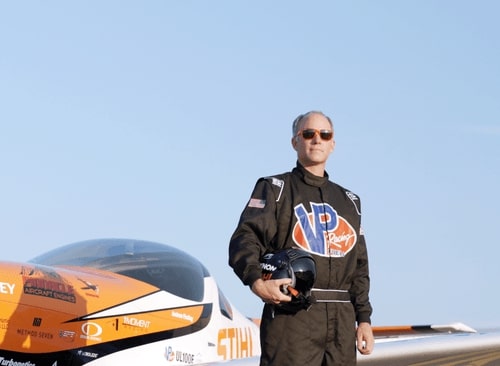
“Our flight testing to date has shown the engine performance is the same between UL100E and 100LL. It is exciting to be testing an unleaded fuel that will comply with ASTM standards, implements the insights gained from the PAFI lessons learned, and shows no perceived difference in the operation of the aircraft. It is a privilege to be working with experienced industry leaders VP Racing and LyondellBasell who have the background and resources to develop, test, produce, and distribute unleaded fuel to the piston powered engines of General Aviation.”
- Andrew Findlay, Test Pilot
For more information about unleaded aviation fuel, visit: www.FlyEagle.org
Frequently Asked Questions
Q: Have you seen any valve seat recession with your fuel?
A: Our fuel showed normal valve seat recession after a 350-hour endurance test in a Continental TSIO-550-K engine.
Q: When will the fuel be available?
A: The FAA is expected to complete testing within the next 18 months. Commercial availability will follow fleet-wide approval, with the rate of deployment dependent on airport readiness to transition from 100LL and the availability of a production fuel ASTM specification.
Q: How does your fuel differ from other unleaded fuel options?
A: Our fuel is distinct in its formulation, and we’ve drafted an ASTM test fuel specification for it. This includes detailed property descriptions and a maximum density specification. This specification and research report were balloted in May and will be re-balloted later this year. The use of our fuel does NOT require an STC – though you will need to have it added to your plane’s placard. Obtaining an STC to use another unleaded fuel could preclude the use of our fleet-wide approved fuel without added modifications and costs.
Q: Can you comment on how the fuel affects maintenance intervals?
A: Our fuel passed a 350-hour durability test in a TSIO-550-K engine without any issues. The test showed no operational issues, with only routine spark plug cleaning at 100 hours. Spark plugs were not cleaned during the last 200 hours. This may allow increased maintenance intervals compared to 100 low-lead (100LL) avgas, saving pilots time and money. Engine oil also showed drastically reduced lead content as the test proceeded with UL100E.
Q: How does the fuel’s performance compare to 100LL?
A: Performance is comparable to 100LL under a variety of operating conditions. Best power & best economy fuel flows are <2% higher than 100LL.
Q: Why did you choose the PAFI program over the STC route?
A: The PAFI program was selected for its transparency and comprehensive testing, fostering collaboration between the FAA, industry stakeholders, and fuel producers. It also aligns with our commitment to developing an industry-approved ASTM specification for the fuel, which is not required under the STC process.
Q: Is the fuel a “drop-in” for 100LL?
A: No unleaded fuel performs identically to FBO 100LL under all conditions in all engines. PAFI testing is designed to identify performance differences between UL100E and 100LL to ensure flight safety for the entire fleet.